Comprehend God’s animus towards sin, but love for the sinner (Isa 66:18,19a). #GodHatesSinButLovesTheSinner #GodWillJudgeSin #RepentReturnToGod
Grace Flows Where Sin Abounds
MORNING WATCH NOTES:
Isaiah makes it clear that, though God’s enemies (disobedient ones) go hiding to commit their sacrilege in private places (17), he sees their sin. He knows clearly who they are, where they are and what they are doing (men love [their private] darkness rather than light for their deeds are evil (see John 3:16-21). Nothing escapes God’s knowledge (Luk 12:2; Heb 4:13).
Isaiah also alludes to a future time (not clear when) that God will hold to account and destroy all his enemies. Every nation will be brought together to see collectively this manifestation of God’s glory and the absolute deliverance of those devoted to him. Lord, you have known my every weakness, sin and failure. Yet, by grace, you loved this old sentry and accepted him in Christ the beloved (Eph 1:6).
Understand God’s Word as Good News not bad news (Isa 64:5-7). #GreatestLoveStoryEverTold #GodLovesYou
MORNING WATCH NOTES:
Isaiah 64:1-5a extols God‘s goodness and awesome deeds. Then in verses 5b–7 we hear that God is angry with us – what horrible sinners we all are. Yet, surprisingly, “No one calls upon God for help or mercy. So God simply allows our sin to run its course in our lives.“
Why is it that we only hear the bad news, “God is angry,“ and fail to hear the Good News, “God is full of mercy?“ The country song troubadour sings, “I just want to read Bible verses and not the Bible versus me.“
The mournful troubadour only hears the Law and knows he can’t measure up. But he keeps trying. He does not hear and know how God loves him and died for his sin. It is not the Bible vs. Me. It is Sin vs. Me (Titus 3:11). “God did not come to condemn the world but to save it (Jhn 3:16,17).
Yes, “All have sinned and come short of the glory of God” (Rom 3:23). “But,” Romans 5:8 says, “God demonstrated his love toward us in that while we were yet sinners, Christ died for us.” Romans 8:1 says, “There is therefore now NO CONDEMNATION for those who are in Christ Jesus.”
Father, I want the world to see your love, mercy and grace through me. There is hope for the country troubadour.
Never lose sight of God in your life (Isa 63:15-19). #VisionOfGod #GodInOurSights
MORNING WATCH NOTES:
Our sin and rebellion toward God comes at a price. To grieve his Holy Spirit (v10) comes at a price. God‘s presence in our lives is withdrawn, having the effect on the wandering soul as to feeling cut off from God. God allows us, in his providence, to drift off the chosen path (v17).
We become blind to God‘s goodness. We wonder how we could ever have even belonged to him or been known by him. But many there are (I am one) who break through the darkness, remember the God of our youth (v16) and cry out to him for deliverance (v17). Thank you Lord, you never lost sight of me though I, for a season, lost sight of you.
Let your anguished heart cry out to God for his love and mercy (Isa 63:10–14). #CallToRemrmbrance #RepentanceTowardGod
Rembrandt’s Prodigal
MORNING WATCH NOTES:
When we have so grieved the Holy Spirit of God, he will at once abandon us to the consequences of that sin and rebellion. But God is never far away from us (though we may drift a long ways away from him – note Psalm 139:7–12). God will always remember his promises to his people (Isa 63:11 above).
But we too will be brought to our senses as we remember his goodness to us (note the prodigal of Luke 15). This remembrance reveals the heart that is moving to repentance. The wanderer humbly cries out to God in anguish of soul for the Redeemer-Shepherd to once again lead by and fill with his Holy Spirit. Lord, this is the new man in me crying out to you for your love and mercy. God WILL respond.
Remain dedicated always to God (Isa 63:7–10). #HandInTheCookieJar #SinWillFindYouOut #CantFoolGod
MORNING WATCH NOTES:
God’s people – so prone to wander, rebel and commit grievous acts against his Holy Spirit. Israel did this, in spite of God‘s great love and mercy. The church in America and elsewhere, has done the same. I myself have wandered, rebelled and committed grievous things against the Spirit of God. In my best moments I am capable of sin against God.
God has no choice but to become an adversary to Israel, the church, to me. God’s people often act like foolish children. They think they can snatch a cookie and God won’t notice (NOT!). Hence, God‘s hand of discipline will come against the erring child. His purpose? In love, to correct and instruct. Lord, thank you that you never give up on this old sentry. You won’t give up on America either.
O that you be filled with the rapturous joy of the salvation of the Lord (Isa 61:8-11). #JoyFillsMySoul
Floods Of Joy Roll Like Mighty Billows In The Sea
MORNING WATCH NOTES:
God takes no joy in having disciplined his people for their sin; using the evil intent of a foreign nation to that end. He hates the evil and will deal justly with those who perpetrate such sin. He will ultimately vindicate his people; deliver, bless and honor them. The prophet, having seen ahead to such deliverance, is beside himself with rapturous joy.
So ought the believer in Christ Jesus be full of ecstasy and joy…like bride and groom on their wedding Day, clothed in elegant garments of praise and righteousness, bedecked with jewel and diadem. What rapturous joy doth spring up everywhere at the salvation of our Redeemer. I am reminded of the hope-filled words of the old gospel hymn:
“There’s a light in the valley Of death now for me, Since Jesus came into my heart! And the gates of the city Beyond I can see, Since Jesus came into my heart!
Floods of joy ‘oer my soul like sea billows roll, since Jesus came into my heart.“
Rely fully on Christ to replace your sin & shame with his righteousness (Isa 61:7) #GarmentsOfPraise #GreatExchange #RagsToRiches https://bible.com/bible/1588/isa.61.7.AMP
The Great Exchange: A Garment of Righteousness For My Shame
MORNING WATCH NOTES:
Isaiah 61:7 summarizes verses 3–6. It expresses a marvelous exchange of joy for shame and dishonor, a double portion of joy at that. In context the nation of Israel will be delivered from Babylonian captivity and find herself immeasurably blessed among the nations.
But the prophetic future here describes a spiritual Israel, life in the kingdom of God. The Messiah, Jesus Christ (described in vv 1,2; see Luk 4:18-22) will deliver beauty for ashes, blessing for mourning and praise for despair. Lives will be rebuilt, remade, in the righteousness of Christ (note 2Co 5:21).
Lord, thank you for the precious treasure of Christ’s righteousness given the duty sentries, in exchange for our sin and shame.
Somewhere around 650 BC Isaiah penned this prophecy. 700 years later a Jewish carpenter from Nazareth, named Jesus, stood and read these words in temple worship…
“The Spirit of the Lord is upon Me, Because He has anointed Me To preach the gospel to the poor; He has sent Me to heal the brokenhearted, To proclaim liberty to the captives And recovery of sight to the blind, To set at liberty those who are oppressed; To proclaim the acceptable year of the Lord.” Then He closed the book, and gave it back to the attendant and sat down. And the eyes of all who were in the synagogue were fixed on Him“ (Luk 4:18f).
In the middle of verse two he stopped and said, “Today this Scripture is fulfilled in your hearing“ (Luk 4:21). Everything about that day in worship was normal until Jesus stopped here and laid claim to these verses for himself as the Anointed One, the Messiah of Israel.
Nothing would ever be the same again. Not the for Jesus, not for the nation of Israel nor the rest of mankind. History was at a pivot point. Three years later Jesus would die on a Roman cross to forgive the sins of mankind and open the door to eternal life. Lord, my faith and belief in you is affirmed. I will follow you to the end as the faithful fulfillment of this prophecy.
Have open eyes and hearts to the Savior, Jesus (Isaiah 59:17–21). #Salvation #Redeemer #Repentance
Yeshuah, Jesus, Weeps & Prays Over Jerusalem
MORNING WATCH NOTES:
God’s answer to the sin of men and there inability to save themselves is to send a righteous, sinless redeemer. He will be dressed in righteousness and robbed in Divine passion. He will judge God’s enemies, all of sin and deliver Salvation.
This redeemer Prince from Jerusalem (Yeshuah [Jesus] Rom 11:26), will keep covenant with Israel, save her from her sin. Indeed all of mankind will benefit, from east to west, from the Lord’s salvation. All those who turn from sin will know the salvation of the Lord. Lord, what a wonderful, merciful and thoughtful Savior you are.
Our sin is so ghastly to God that it leads to his wonder (amazement). But God does not wonder as if he is surprised by new information. I am thinking as I write, “…and who am I, a finite being subject to the limits of my existence, to be trying to explain the wonder/amazement of God at our sin.”
But, my feeble understanding leads me to conclude that God’s extreme disgust with man’s (my) cesspool of sin leads him to an extreme sovereign act of thoughtful concern for man; that if he did not act on our behalf, there would be none who could or would. Lord, I am humbled at the extremity of your concern to do for for man, for me, what we could never do for ourselves.
Isaiah reminds Judah that God had not left them. They had left God. Their sin (subsequently, my sin) has piled up on them (vv2–8) and testifies against them. Their destruction is eminent (Babylonian captivity). So, before there can be confession, cleansing, forgiveness and redemption there must be a recognition of sin and acceptance of responsibility for it.
Like Judah, I must own my sin before God, accept my lostness (recognize my perilous predicament) before I can reach out to the one (Jesus) who has come to rescue me, to pull me to safety. This is repentance: recognizing that I am a sinner bound for eternal destruction and accept salvation from God.
Lord, your word exposes my sinful and rebellious heart. I have seen my sin for what it is before you. I repent and receive your cleansing, forgiveness and redemption (Jhn 3:16; 1Jn 1:9).
Although God speaks through Isaiah forcefully about the consequences of unholy worship and sin (Ch 56–58), he is not without abundant compassion for those who turn to him. To them he will give an everlasting name (56:4,5); bring them into his presence and fill them with joy (vv 6,7).
God will restore the crushed spirit of the humble, give courage to the weak and give peace and comfort to the distressed; praise will be on their lips (57:15,18). Extravagant grace and salvation shall overwhelm them. Their light will affect everyone around them and he will satisfy their deepest needs (58:10-12).* Father, I am overwhelmed at your abundant and unconditional love for me.
_______________
* (Optional read from Isa 58:8-14)
Get a sense of God’s overwhelming love, mercy and grace here (paraphrased):
If you will worship me [God] in a spirit of honor, respect toward others, genuine humility and true repentance, Salvation will come to you like the breaking dawn (it will burst in upon you in magnificent glory; you will be in awe).
Your true godliness will cause you to advance and God’s glory will protect you. When you call on me I will hear you and answer quickly. Your light shall shine in the darkness around you. Your own darkness will be bright as noonday. The Lord will guide you continually.
You will have water when you are thirsty and strength when you are weak. There will be a beauty about you like a well watered flower garden. Your life will be an ever flowing spring of water. Some of you will even have the reputation as builders of deserted and ruined cities, builders of bulwarks to protect; restorers of homes/families.
The Lord will delight in your worship; he will give you honor and satisfy you with the inheritance of promises made to your spiritual ancestors.
May we have a heart of repentance towards God (Isa 58:1-3). #PhonyReligion #UnholyAlliances #Unfaithfulness #RepentTowardsGod https://bible.com/bible/116/isa.58.1-3.NLT
MORNING WATCH NOTES:
Judah is getting her day in court. God lays out his case for unfaithfulness and consequently her 70 years of captivity in Babylon. The church today would do well to pay attention to charges brought against Judah.
The church is not exempt from phony piety, prideful and self-indulgent leaders (56:9-12), unholy alliances with strange gods, and unfaithfulness to God (57:3-8), oppression of the weak, narcissism (58:3), infighting/bickering (58:4), et al.
Yet, in all this rebellion and unfaithfulness, God stands ready to forgive at the first sign of genuine repentance toward him (57:18–21). Lord, search my wayward heart; show me any unfaithfulness to you; lead me according to your ways.
Isaiah chapters 56–58 address the spiritual significance of keeping Sabbath holy. But God is not talking about a day on the calendar – a perfunctory act done out of habit. God is talking about the importance of coming to the act of worship with a heart that is humble, contrite and surrendered to him; in love with him.
It is not the keeping of a certain day that is important. It is keeping “holy” as you worship on that day, that is important. If you desecrate worship with an unholy lifestyle you will suffer the consequences. Unholy worship is anathema to God (vv 56:9-12; 57:3-58:3). But those who worship with a humble heart, they will live in the presence of God, restored, revived (57:15; Psm 34:18).
PAY ATTENTION!
What the duty sentry does next with this understanding will make all the difference. It will mean life for you or death. Lord, “Create in this me a clean heart” (Psm 51:10).
Who could grasp the inexplicable ways in which God thinks and acts. We may never understand the “why” or the “ways” in which God acts, on this side of eternity. But we are able to see “how” he acts and “what” he does. He has fully explained himself (all we need to know) in Christ Jesus.
Men find it hard, if not impossible, to forgive…to pardon the offenses of others. The multiplied number of offenses and the degree of offenses converge to make forgiveness impossible for all, all the time. But in God, men can find unlimited pardon. There is still time to humble ourselves and repent. Lord, give this crusty old sentry a humble repentance towards you, your will and your purposes.
Isaiah 53:10–12 stands in sharp contrast and great relief to verses 1–9. Here it is revealed, as difficult as it is to absorb, that the plan of God all along had been to crush the Redeemer-Prince and cause him great anguish. However, it is important to note that the point of that anguish was not for the sake of anguish. It was for the sake of absolving man’s sin.
Does a parent take joy in punishing a child? No. It is for the sake of a future outcome. Just so, the Redeemer will see God‘s plan prosper and the redemption accomplished by his suffering. He will be satisfied at the future outcome. Many will come to wholeness out of sin. The Redeemer himself will be honored as a victorious soldier.
(Note Hebrews 12:2 “[Keep your] eyes on Jesus, the champion who initiates and perfects our faith. Because of the joy awaiting him, he endured the cross, disregarding its shame. Now he is seated [victorious] in the place of honor beside God’s throne.” (NLT) )
The only adequate response of the duty sentry is to fall on the floor of the watchtower, weep tears of repentance, tears of joy and worship the victorious Redeemer.
May we grow in our knowledge of, praise and affection for, the Redeemer and his enormous sacrifice for sin (Isa 53:7-9). #SinsDebtCanceled https://bible.com/bible/1588/isa.53.7-9.AMP
MORNING WATCH NOTES (Extended):
The prophecy of Isaiah 53 continues here to describe the oppressive and unrighteous nature of the Redeemer’s shameful treatment and trial. Yet, this Redeemer, under great duress, said not a word of complaint. He surrendered as a lamb led to the slaughter, as a sheep before his shearers. He saw it through to the end.
The debt of sin, death, was called in. The Redeemer patiently, meekly and quietly suffered oppressive treatment and the unrighteous proceedings of incited leaders and an angry mob. He was charged for acts he never committed. He was cut down, sharply canceled out, before ever he might have a single heir in this earth (v10 informs us that he would ultimately have many spiritual heirs). For the sins of the people this righteous man, we now know as Jesus, The Christ, was struck down violently and suffered in our place.
The Redeemer, falsely accused, died a criminal’s death. The Jews would have buried him dishonorably along with the two thieves or the malevolent but sparred Barabbas. However, the Romans handed his body over to Joseph, the Aramathaean – a “rich man.” Why? Because according to the Scriptures, “His actions were [truly] prompted by pure love and his speech consisted of unclouded sincerity and truth.“* This honorable burial would inaugurate his glorification to come, noted in v10,12.
Barnes assesses this passage beautifully: “How strikingly and literally was this [prophecy] fulfilled in the life of [Christ]. It would seem almost as if it had been written after he had lived, and was history rather than prophecy. No other person ever so entirely accorded with the description of [Christ] by the prophet.“**
O how great is the enormity of this old sentry’s sin. How sufficient is the wonderful matchless grace of my Redeemer-Prince (Jesus the Messiah). He forgave all my sin and gave me life eternal. All he asks in return is that men would “believe the message” and trust in him (v1). The way I thank him and honor him is by believing and following him.
“By his stripes we are healed.“ Grasp the context here. Our Redeemer didn’t just represent man in redemption from sin. He literally took our sin AND all their consequences into his own being. All our weaknesses (the result of sin), all our sorrows, our troubles, our rebellion, our sickness and disease (all the results of sin, increasing his pain exponentially), he absorbed in his own body.
O, the anguish of our Redeemer’s soul. It was unspeakable, bearing ALL our sin and their consequences. His “stripes“ were literal. They painfully represent his horrible, unspeakable death. ALL that sin is and represents – the disease of certain and eternal death (were there NO redemption) – our Redeemer died for and provided for us complete wholeness and healing. We are healed, saved, from the curse of sin and ALL its consequences.
I am staggered and left without words, how to respond. The Lord tells me in verse one my only necessary response. Simply “BELIEVE the message,” receive and follow Jesus.
The painful reality is that our Redeemer-prince, who is here spoken of, suffered excruciatingly for our sin. He was treated as lower than the lowest in society. He took upon himself the grief and agonies of men. He was our substitute. Men interpreted his calamities as punishment for his own sin. But, NO! It was for our sin, my sin, that he took such punishment.
Jesus was my substitute. He was crushed for my sins, whipped so I could be healed (made whole). It was I for whom my Savior bled and died. He was my substitute. The Lord – God laid upon him all the sins of every man, past and present. He was my substitute; the sinless servant suffered punishment for my sin. No other could have stood in for me and borne the penalty for my sin? No one! Lord, may the love and devotion of this old sentry for you, deepen with every passing day.
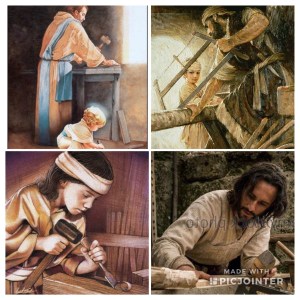
Who would ever have thought that a scrawny kid from Nazareth, the son of a humble craftsman, would grow up to become the savior of the world. Unlikely.
Jesus did not possess all the attributes we’ve come to expect in “leaders” – wealth, power, good looks, education, large following. No, the Messiah, Jesus, had none of those things. Unlikely.
Jesus was an “ordinary Joe,” as we might put it. He was fully acquainted with the hurt men feel (no silver spoon in his mouth). Therefore, he was despised and rejected. But he was severely underestimated. Unlikely.
Men have made a drastic miscalculation to disregard the life, teaching and ministry of Jesus – the Messiah, Savior of the world. “Who has believed the message? Who has seen his power?” (V1). Lord, I have believed and have received you as Savior and Lord. I have seen your power in my life.
… And so the Lord calls upon Israel to “get up and get out” of Babylon, her captors of 70 yrs. She is set free by her deliverer, Cyrus of Persia (a type of Christ). Israel is commanded also to take time to purify herself. She is to prepare to remove the sacred things of worship from Babylon, taken as booty by this blasphemous brood (2Ch 36:18).
God himself will lead Israel out of Babylon like a general leading his troops. He will be their rear guard as well. Just so, every believer is commanded to “COME OUT“ of a world of sin and shameful things and be separate from all that is unholy (2Co 6:16-18; Rev 18:4). Thank you Lord, for leading this old sentry out of the unholy places in my life; for always being my rear guard as well.
The nation of Judah faces 70 years of captivity for her sins and her rejection of God. She will feel the full fury of her God. Her sin will lead her to absolute desolation and famine, destruction and war. Those in her midst who guide and comfort her will be exposed as frauds, leaving her devoid of help.
But in the end, her God will defend and deliver her. In repentance she will again find joy in her God and know peace. God will then turn his fury on her arrogant oppressor and trample them into the dust. I understand that it is never a good day to be a disobedient child; never a good day to be the instrument of chastisement in God’s hands. Lord, soften the hearts of your sentries towards you and towards others.
Isaiah 40–48 is concerned with the future hope of Israel being restored by the Persian king, Cyrus; after 70 years of captivity in Babylon. Isaiah 49–55 is concerned with the future hope of all men in the coming Redeemer-shepherd: Christ, the Messiah.
Here God reminds all Israel, #1) their calamity was not due to the caprice hand of God. No. It was, #2) due to their own sin. They sold themselves into slavery. #3) in their captivity to come Israel will ask, “Where is our God? Has he no power to save?“ God answers, “Oh, I have the power, but not the will to save. I see Lord, that my disobedience will lead to my discipline, my judgment, without remedy. Until you are ready save.
Lord, may the heart of the sentry stay surrendered to you.
The God of Israel, which is to say, the God of our salvation, has no equal (vv3–5). The Babylonian gods, “Bel and Nebo“ (v1), are harmless against the God of Israel (Bel, chief domestic god; Nebo, god of wisdom and learning (47:10), are man-made gods (lies) that deceive men to think that they know more than God). The arrogant Babylonians will learn this lesson the hard way.
The gods of this world (power, fame, wealth, might, knowledge, et al.) lead men away from dependence upon the one true God. That is a sure fire way to lose the blessing of God. If America is to know the blessing of God once again, she needs to deny those deceitful gods of this world and return to him. Lord, deliver my heart from a “know it all” attitude. Deliver my beloved country from prideful dependence upon anything but you.
“O Israel (O America), do not fear.” When judgment comes upon her, God will not destroy her completely. God will ransom his own, call them by name to himself. Through deep waters, difficulties and oppression, God promises to be with her (1-4).
“Do not fear.“ God will deliver his wayward people through the fire of judgment. Those who have trusted, as well as those without understanding – all will see that I, the Lord, I am able to deliver from captivity (5-13).
God says, “I am about to do a new thing” (v19). My chosen ones will be refreshed (see also Acts 3:19). They will once again honor God. Lord, through tears (of repentance) may I seek times of refreshing from you, I have everything to gain.
Such a beautiful picture of the Lord’s Messiah (vv1–9). He will bring justice. He will not crush the frail reed or snuff out the last flickering light of a candle. He himself will be a light to guide the nations. He will open blind eyes, deaf ears and set free captives held in bondage to the enemy, the evil one.
God’s chosen Messiah, Jesus, is worthy of praise (vv10-17. He will lead blind Israel on a new path, smooth their road. He will not forsake them, though they have failed him time and time again. Lord, you deal justly with my sin, but you do not crush me. Though I so often fail you (vv18-25), you never fail me. Grace is greater than all my sin.
Could there be any more consoling words than those spoken here by God to Isaiah. The prophet is told to speak tenderly to his people who will face punishment for their sin. Isaiah is to speak words of comfort and pardon for sin.
Oh sinner, rebellious child of God, the sovereign God‘s heart breaks for you. No God like the God of heaven bears his heart to sinners and rebels like our God. Lord, this sentry is in debt for your pardon of my sin and your heart towards me and all who have sinned against you.
Here, Paul moves from the ideal of “death to self“ (v3) to the practical working out of that principle in reality, in the believer’s daily life. Every day this body of flesh will challenge the right of God to be in control. This is nowhere seen more clearly than in sexual sin, immorality, impurity, lust, evil desires and greed. All of these sins of the flesh say, “SATISFY ME!”
Self is obsessed with itself, the adoration and worship of itself. This is what brings God’s displeasure. These sins will not only be judged in eternity, they will also incur their own judgment here and now. Who has not felt that condemnation? Father, I rely upon your strength to turn from sin to you. I reserve the “right to refuse” service to self.
PRAYER: Know and fully trust in the transforming power of Christ to be one with him (Col 2:11–15). #UnitedWithChrist #BaptisedIntoChrist #NewLifeInChrust https://www.bible.com/116/col.2.11-15.nlt
MORNING WATCH NOTES:
Our union with Christ (v10) is exemplified in the signs of circumcision and baptism. Circumcision signifies that the old sinful nature is dead (v11). In baptism, having died to sin, this union is pictured as a spiritual burial and resurrection unto new life.
Baptism pictures one being buried (down into the water) with Christ into a “water grave.” Then, by God’s transforming power, that believer is raised (up out of the water) with Christ in his resurrection onto new life. Neither circumcision nor baptism saves us.* They merely picture our spiritual transformation from death to new life. Lord, I shall trust fully in the transforming power of Christ and my union with him.
* Some believe that one must be water baptized in order to be saved. It follows then that they ought also to be circumcised in order to fulfill Paul’s complete analogy. Don’t see anyone standing in line for that. Just sayin’.
God is not a compliant enabling father. He knows just when and how to discipline. He knows the limits of our ability to withstand testing and trials (1Co 10:13). Discipline is always an option (Heb 12:10,11). It is clear that God is always prepared to discipline his people to purge them from sin (though not every trial is for sin-Jas 1:12; 2Co 12:17; Rom 5:3–6).
In the end, like a loving father, God will come to his own and comfort them. You can count on that. The end result of God‘s discipline is to return to him, to love and worship him. Lord I have known your loving discipline and your comforting embrace. I look to you for the correction and reproof that I need.























 The Prayer Sentry