It is true that Jehovah God briefly turned his back on Israel because of her unfaithfulness (vv7,8). But this brief moment is in contrast to his promise of everlasting love and mercy (vv9,10).
This is the solemn promise of God: he would never again turn his back on his people. They would see the grander of great mountains dissolve before their eyes (see pigs fly) before God would ever again turn on his people.
As it has been for Israel, so it is for his church. Persecution, calamity and troubles may come. But God’s fierce love and devotion for his people will never be, shall never be, derailed nor gone missing. Lord, you have never forsaken this elder sentry; been forever faithful to me.
Coming down out of the clouds of the “Suffering Servant” prophecy, Isaiah jubilantly exhorts Israel to break into triumphant songs of joy. She had been cut off for her unfaithfulness. Like a woman unable to have children she had been shamed. But now God would show her favor as a woman blessed with many children.
Israel’s mourning over captivity and shame would be changed to joyful singing. She would be set free. Her shame and unfaithfulness, she would remember no more. And so it has been for this old sentry. Lord, you have blessed me since my days of repentance – the sins of my youth have been forgotten and I exult in my Redeemer.
Comprehend, acknowledge, God‘s great love and burden for us as rebels (Isa 53:10–12). #GodLovesYou #JesusDiedForYou #JesusInterceedsForYou https://bible.com/bible/1588/isa.53.10-12.AMP
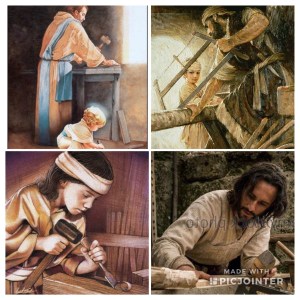
Jesus is in this picture in every face
MORNING WATCH NOTES:
In these verses God explains clearly that his Servant, our Redeemer, will lay down his life as the final sacrifice for man’s sin (v10). As a result, many rebels will be made righteous because of his sacrifice (v11; Rom 10:9,10; 2Co 5:21; Eph 4:22–24).
Jesus is in this pic in every face
Most remarkable of all, he gave up his glory to become a man like me (Phi 2:7). He was subject to every sin and temptation, yet he himself was without sin (Heb 4:15,16). “He was counted among [identified with] the rebels (v12).“ He was like me but not me. He bore my sin and now as my Redeemer he is at the right hand of the Father advocating and interceding for me (Rom 8:34). He is my compassionate Prayer Sentry.
Isaiah 53:10–12 stands in sharp contrast and great relief to verses 1–9. Here it is revealed, as difficult as it is to absorb, that the plan of God all along had been to crush the Redeemer-Prince and cause him great anguish. However, it is important to note that the point of that anguish was not for the sake of anguish. It was for the sake of absolving man’s sin.
Does a parent take joy in punishing a child? No. It is for the sake of a future outcome. Just so, the Redeemer will see God‘s plan prosper and the redemption accomplished by his suffering. He will be satisfied at the future outcome. Many will come to wholeness out of sin. The Redeemer himself will be honored as a victorious soldier.
(Note Hebrews 12:2 “[Keep your] eyes on Jesus, the champion who initiates and perfects our faith. Because of the joy awaiting him, he endured the cross, disregarding its shame. Now he is seated [victorious] in the place of honor beside God’s throne.” (NLT) )
The only adequate response of the duty sentry is to fall on the floor of the watchtower, weep tears of repentance, tears of joy and worship the victorious Redeemer.
May we grow in our knowledge of, praise and affection for, the Redeemer and his enormous sacrifice for sin (Isa 53:7-9). #SinsDebtCanceled https://bible.com/bible/1588/isa.53.7-9.AMP
MORNING WATCH NOTES (Extended):
The prophecy of Isaiah 53 continues here to describe the oppressive and unrighteous nature of the Redeemer’s shameful treatment and trial. Yet, this Redeemer, under great duress, said not a word of complaint. He surrendered as a lamb led to the slaughter, as a sheep before his shearers. He saw it through to the end.
The debt of sin, death, was called in. The Redeemer patiently, meekly and quietly suffered oppressive treatment and the unrighteous proceedings of incited leaders and an angry mob. He was charged for acts he never committed. He was cut down, sharply canceled out, before ever he might have a single heir in this earth (v10 informs us that he would ultimately have many spiritual heirs). For the sins of the people this righteous man, we now know as Jesus, The Christ, was struck down violently and suffered in our place.
The Redeemer, falsely accused, died a criminal’s death. The Jews would have buried him dishonorably along with the two thieves or the malevolent but sparred Barabbas. However, the Romans handed his body over to Joseph, the Aramathaean – a “rich man.” Why? Because according to the Scriptures, “His actions were [truly] prompted by pure love and his speech consisted of unclouded sincerity and truth.“* This honorable burial would inaugurate his glorification to come, noted in v10,12.
Barnes assesses this passage beautifully: “How strikingly and literally was this [prophecy] fulfilled in the life of [Christ]. It would seem almost as if it had been written after he had lived, and was history rather than prophecy. No other person ever so entirely accorded with the description of [Christ] by the prophet.“**
O how great is the enormity of this old sentry’s sin. How sufficient is the wonderful matchless grace of my Redeemer-Prince (Jesus the Messiah). He forgave all my sin and gave me life eternal. All he asks in return is that men would “believe the message” and trust in him (v1). The way I thank him and honor him is by believing and following him.
“By his stripes we are healed.“ Grasp the context here. Our Redeemer didn’t just represent man in redemption from sin. He literally took our sin AND all their consequences into his own being. All our weaknesses (the result of sin), all our sorrows, our troubles, our rebellion, our sickness and disease (all the results of sin, increasing his pain exponentially), he absorbed in his own body.
O, the anguish of our Redeemer’s soul. It was unspeakable, bearing ALL our sin and their consequences. His “stripes“ were literal. They painfully represent his horrible, unspeakable death. ALL that sin is and represents – the disease of certain and eternal death (were there NO redemption) – our Redeemer died for and provided for us complete wholeness and healing. We are healed, saved, from the curse of sin and ALL its consequences.
I am staggered and left without words, how to respond. The Lord tells me in verse one my only necessary response. Simply “BELIEVE the message,” receive and follow Jesus.
When I think of my fallen self and how desperately wicked can be my heart, I think of my risen Savior who has borne my sin and shame and redeemed me to himself.
The sin, which does so easily beset me, has its end in the cross of Calvary. It drives afresh the nails into my Savior’s hands and feet. My besetting sins do not go unaccounted for. These…
…my sins of commission – to lie, to lust, to speak ill/criticize, to waste time;
…my sins of omission – to disobey by not going when moved, not speaking when prompted, not helping when urged;
…my sins of disposition – envy, pride, anger, evil desire;
All these my sins, and more, go painfully under the shed blood of Jesus on the cross.
My unmerited righteousness in Christ does not come without a price. I cannot flee the failure of sins committed, but I can, in Christ, flee from the sin not yet committed before it besets me. AND EVERY SIN FROM WHICH I FLEE IS THAT MUCH PAIN RELIEVED IN MY SAVIOR’S BODY. FOR EVERY SIN RESISTED IS A SIN FOR WHICH HE DID NOT HAVE TO DIE.
Where sin has abounded in my heart without confession, my precious Savior is left to suffer. For lack of confession is unbelief in his atoning sacrifice, his faithfulness to forgive my sin and cleanse me from all unrighteousness (1Jn 1:9). My confession acknowledges and accepts his sacrifice.
If he did not want to forgive us he would not have died so horrible a death. So believe. Do not carry your burden of sin. He has borne it.
Confess it and do not mourn any longer. You are forgiven and accepted in the beloved (Eph 1:6).
__________
(Note: the following is from Valley Of Vision, a book of Puritan prayers)
“…if I sin not I should thank thee for it;
“…if I do sin I should be humbled daily under it;
“…I should mourn for sin more than other men do, for when I see I shall die because of sin, that makes me mourn; when I see how sin strikes at thee, that makes me mourn; when I see that sin caused Christ’s death, that makes me mourn;”
“…Thou has taught me that faith is nothing else than receiving thy kindness; that it is an adherence to Christ, a resting on him, a love clinging to him as a branch to the tree, to seek life and vigor from him.” [To mourn no longer]
“…I thank thee for showing me the vast difference between knowing things by reason, and knowing them by the spirit of faith. [Job 42:5,6]
“…By reason I see a thing is so; by faith I know it is.
“…I have seen thee by reason [head knowledge] and have not been amazed.
“…I have seen thee as thou are in the Son [by faith] and HAVE BEEN RAVISHED TO BEHOLD THEE…
“…I bless thee that I am thine in my Savior, Jesus.” [Mourn no longer]
The painful reality is that our Redeemer-prince, who is here spoken of, suffered excruciatingly for our sin. He was treated as lower than the lowest in society. He took upon himself the grief and agonies of men. He was our substitute. Men interpreted his calamities as punishment for his own sin. But, NO! It was for our sin, my sin, that he took such punishment.
Jesus was my substitute. He was crushed for my sins, whipped so I could be healed (made whole). It was I for whom my Savior bled and died. He was my substitute. The Lord – God laid upon him all the sins of every man, past and present. He was my substitute; the sinless servant suffered punishment for my sin. No other could have stood in for me and borne the penalty for my sin? No one! Lord, may the love and devotion of this old sentry for you, deepen with every passing day.
Who would ever have thought that a scrawny kid from Nazareth, the son of a humble craftsman, would grow up to become the savior of the world. Unlikely.
Jesus did not possess all the attributes we’ve come to expect in “leaders” – wealth, power, good looks, education, large following. No, the Messiah, Jesus, had none of those things. Unlikely.
Jesus was an “ordinary Joe,” as we might put it. He was fully acquainted with the hurt men feel (no silver spoon in his mouth). Therefore, he was despised and rejected. But he was severely underestimated. Unlikely.
Men have made a drastic miscalculation to disregard the life, teaching and ministry of Jesus – the Messiah, Savior of the world. “Who has believed the message? Who has seen his power?” (V1). Lord, I have believed and have received you as Savior and Lord. I have seen your power in my life.
May hearts dissolve in thankfulness and eyes melt in tears for the Savior’s love and sacrifice (Isa 52:13-15). #NoGreaterLove #SufferingServant https://bible.com/bible/1588/isa.52.13-15.AMP
MORNING WATCH NOTES:
Following Jehovah‘s announcement of his deliverance of Israel from the hands of Babylon the subject is left. What follows is the most magnificent description of the coming Redeemer and Messiah in all the Bible (Isa 52:13-53:12). There is no superlative in the English language to describe or enhance this portion of scripture regarding the Lord’s Messiah – Jesus.
Isaiah now describes the coming Savior of the world. He sees his disfigurement and rejection as a necessary part of salvation-redemption. Described here as the humble suffering servant, this Savior would cleanse the nations. Though not immediately recognized he would amaze many and he would be highly exalted. Paul refers to this passage as the gospel to the world (Rom 15:20,21).
Lord, words fail me to express my gratitude for such a gracious savior. “Dissolve my heart in thankfulness, and melt mine eyes to tears.” *
Filled with anticipation for the announcement of the coming Messiah-Deliverer (Isa 52:13-53:12), God announces “Good News“ (v7) to those in captivity. Deliverance is here. Judah wantonly sold herself into slavery for nothing. She will be released at no cost.
God will raise up a conquering prince, Cyrus of Persia. He will plunder Judah’s captors and in an act of mercy and justice, release God’s people back to their homeland. “How beautiful are the feet of the messenger who brings good news of peace and salvation. The God of Israel reigns.“ He has done the same for me. Lord, ain’t that Good News!
AIN’T THAT GOOD NEWS
I got a robe up in that Kingdom; Ain’t that good news, Ain’t that good news
I got a robe up in that Kingdom; Ain’t that good news, Ain’t that good news
(CHORUS) I’m gonna lay down this world, Gonna shoulder up my cross; Gonna take it home to my Jesus, Ain’t that good news, ain’t that good news
I got a crown up in that Kingdom; Ain’t that good news, Ain’t that good news
I got a crown up in that Kingdom; Ain’t that good news, Ain’t that good news
(CHORUS)
I got a Savior in-a that Kingdom; Ain’t that good news, Ain’t that good news
I got a Savior in-a that Kingdom; Ain’t that good news, Ain’t that good news
Endow us with renewed enthusiasm for the things of God: the will, the work and the wonder (Isa 52:1,2). #Renewal #Revival #TheJoyOfHeaven https://bible.com/bible/116/isa.52.1-2.NLT
Anticipating The Reveal Of Heaven’s Messiah-Redeemer
MORNING WATCH NOTES:
“Wake up, wake up, O Zion! Get your party clothes on. Arise from the dust and the ashes. Take the place of honor, O Jerusalem (vv1,2). I, the Lord, I’m about to demonstrate my power…do an unheard of thing (v10).” Jehovah God is ready to “throw down” one of the greatest prophecies of the coming Messiah-Redeemer in recorded Scripture.
Isaiah‘s pen is ready. He has no idea what God is about to reveal to him [in Isaiah 53]. But God knows. I see God as beside himself with joy as he anticipates what he is about to say. On this side of redemption I too know what is coming. In my morning watch I am just trying to let that anticipation of Heaven sink into my small finite place in the universe. Lord, endow this lone sentry with renewed joy for the things of God: the will, the work and the wonder.
Here reads the assurances from God of the complete effectiveness of his Redeemer. If God sends him, he will respond to his need. God will help him, protect him and make of him the promise to deliver his people. He is a Redeemer–shepherd (vv9–12).
In the age of the Redeemer (“the right time”) men will be set free from the darkness of their sin and come to the light. They will be led, cared for and nurtured by the great Redeemer-shepherd. This deliverance is worthy of great rejoicing and loud songs of praise.
Lord, what a great assurance is ours that our promised Redeemer-shepherd has come. He is Jesus, the crucified one; raised from the grave, ascended to Heaven and now seated at the right hand of God.
Jesus, my redeemer–friend, wonders in his humanity at the outcome of his earthly work and ministry, as perhaps ineffective. (He also stopped and prayed three times over the certainty of God’s plan in the garden before his crucifixion – Mat 26:36-47.) He has no hesitation in trusting his life’s work into the hands of Jehovah God (v4). Isaiah 49:5-7 explains why.
Our Redeemer is confident in the source, strength and certainty of his life call and work (v5).
He is assured that nothing he did on earth will be lost. It will ultimately be used to point ALL men to God (v6).
Finally, he is assured that “rejection,“ or apparent failure, is not the measure of success in God’s eyes. God is faithful (v7 & 25:1).
Lord, I can learn lessons from Jesus in trusting you completely with the outcomes of the work to which you call me.
Every now and then one has to stop and take stock of all God is doing; take into account the bigger picture. It enables the prayer sentry to pray with understanding. I had one of those days yesterday. Here is what God showed me.
The story of Israel, the Jewish race, is the story God’s redemption. God chose to reveal himself to mankind through the Jewish race. They would be the chosen seed, the chosen light pointing men to God. However, they failed to do that as a people. They were persistently disobedient and rebellious toward God. Yet, God seems somehow to always be the protective father, letting his favored child continue in disobedience. Why does God continually protect them? I find myself wondering, “Why does God seem to always put up with Israel’s waywardness and incorrigibility?” “Why did he choose them?”
The Old Testament reveals that God does discipline his chosen people throughout the course of their national life. But Israel, as a whole, never seems to get it. They just seem to be a constant disappointment to God. At one point God does seems willing to start over. But then Moses steps in to protect them. He asks God not to destroy Israel completely and God relents (Exodus 32:1-14).
The questions to me seem to be: why did God choose Israel? Would there not have been another people group who would have shown themselves to be more faithful? The answer to that questions is, “Probably not.” Why did God find it necessary to choose some outlying race of people anyway?
Certainly, greater minds than mine have pondered these questions for, no doubt, ages. But here is my simple and feeble assessment. I think the answer to why God chose Israel, the Jewish race, as his chosen people, lies in the omniscient plan, character and love of God. In the beginning God set out to redeem mankind from their fall into sin. God’s omniscient plan called for a Redeemer and a sacrifice for sin. This is seen in the first blood sacrifice of an animal out of the Garden of Eden. God performed the first sacrifice. Instead of killing Adam for his sin (for the wages of sin is death-Rom 6:23), God took the life of an animal (shed its blood as a substitute, propitiation for sin) and used the skin as a “covering” for Adam and Eve. Thus, God covered the sin of man (Gen 3:21).
Back to the nation of Israel. God didn’t choose the Jewish people because of their superior moral character or their religious devotion (Rom9:10-13). In fact, God never chooses any of us because we are so righteous or so good. In fact, to the contrary, Scripture says there is no one righteous, not one (Rom 3:10). But I digress.
The Jewish race was chosen because God is sovereign not because they were superior. He could have chosen any people group. Through this chosen seed, God would institute and implement symbols of worship, sacrifice and redemption. This structure in the Jewish sacrificial system would be, has been and is, sufficient to forecast or foretell God’s Redeemer and the sacrifice for sin. This sacrifice would be the ground of redemption for all who would believe.
Israel was and is no different from any other people group. They were, we all are, sinners. But what God needed was a human ancestry, a lineage, a seed from which a Redeemer-sacrifice would emerge, from which his GRACE would extend to all men. Jesus Christ, the Messiah, was that Redeemer–sacrifice. Jesus would be the fulfillment of God’s promise of redemption. He would be God’s sacrifice, God’s instrument of GRACE to all men for their sin. The Jewish nation was selected by the sovereign plan of God to bear witness to and be the seed and instrumentality of that redemption. She was not selected because she was perfect but because God is sovereign.
Further, God chose the Jewish race knowing full well in advance that they would be prideful, disobedient, obstinate, stiff-necked, rebellious and hard hearted. God knew in advance that this people would break his heart over and over again. God would discipline and or punish their sinful rebellion, but he would not completely destroy the ancestry, the lineage, the seed from which his Redeemer would eventually emerge. In fact, God would go to extravagant lengths to protect his people…even if it was only a small remnant.
So, the story and history of God’s chosen people is really the story of all men. Just as God showed mercy and grace to a sinful, stubborn and rebellious people of Israel, so he shows mercy and grace to all people. The story of God’s longsuffering with me is reflected in the story of God’s longsuffering with Israel. They deserved nothing. He gave them everything. So, it is with me as well.
All men everywhere are indebted. Not indebted to the Jewish race, but to God, for choosing a people (a people like me, no different from me) to reveal his Redeemer, Jesus Christ. There were no perfect people from which to choose. There are still no perfect people. Never has been. What we do have is a perfect Redeemer, Jesus Christ, whom God was pleased to sacrifice for the forgiveness of sin. Just as Israel was chosen by GRACE, sustained by GRACE and saved by GRACE, so we to are chosen, sustained and saved by GRACE.
There are none righteous, no not one (Romans 3:10).
All have sinned and come short of the glory of God (Romans 3:23).
The wages of sin is death, but the free gift of God is eternal life through Jesus Christ our Lord (Romans 6:23).
But God demonstrates is own love for us, in that while were still sinners, Christ died for us (Romans 5:8).
If you confess with your mouth the Lord Jesus and believe in your heart that God has raised him from the dead, you will be saved (Romans 10:9).
Next time you think that God is unfairly and forever longsuffering with the Jewish race, his seed of redemption, think about how longsuffering he has been and is with you as well. So we should be towards others.
Though the people of God were promise breakers, stubborn, obstinate, stiff-necked and hardheads (v1,4), still, God was gracious. Though they were indifferent to God and often ignored him, God was gracious. Though they did not listen when God exposed their idols as imposters (vv5,14) and revealed himself as far superior (vv12,13,17), still, he was gracious.
No matter the rebellious state of his people, still he was gracious. For the sake of his name he would deliver them, set them free to a future and a hope from captivity in Babylon (v11). God is the consummate loving Father. God has and always will, stand by his people, as a father with his children (vv20,21). He stands by me in my failures. But for those whom he does not know, there will be no peace (v22). Lord, the heart of this old sentry sings of his gracious Redeemer.
What happens when God delivers men from a drought of blessing, goodness and righteousness? What happens when revival comes, when awakening comes? Having lost their sense of worship for God in captivity, what would deliverance mean for Israel? What would it look like for us today.
The heavens will open wide with showers of blessing pouring down on the people. The skies open up and rain down righteousness on all men. Just as a parched land is watered and renewed, so the parched souls of men will sprout forth the beautiful fruit of salvation and righteousness. Such is the deliverance of Israel from her captivity. Such it will be for all men who repent and put their trust in God. Lord, pour down revival and awakening in our day on the parched souls of humanity.
If there was ever a time in America when we needed a certain hope it is now. Give us a deep and abiding trust in you Lord.
PRAYER: Trust God in the hard times of life as well as the good times (Isa 44:4-8). #GodIsGoodAllTheTime #AllTheTimeGodIsGood https://bible.com/bible/116/isa.45.4-8.NLT
MORNING WATCH NOTES:
God clearly explains why he summoned, called and equipped the Persian, Gentile, pagan king, Cyrus. Because he knew his people would need 1) a deliverer from the coming Babylonian captivity, 2) a hope in the midst of tragedy and darkness (God is the God of both dark times and good times – v7) and 3) he would use this prophecy to later reveal himself as the One who fulfills his redemption promises. The entire world would know that he is God.
Lord, it is clear to me that you are always working behind the scenes on my behalf. Nothing happens by accident. You give me hope when all hope seems gone. I am never without hope.
Here is seen one of God’s most incredible prophetic accounts. God declares through Isaiah, by name, that “Cyrus,“ the Persian, shall be God’s “shepherd“ king, “anointed one,” to deliver Israel out of Babylonian captivity.
Why so incredible? Because this prophecy was delivered by Isaiah 150 years before Cyrus was born. Further, he is the only pagan, Gentile king referred to by God as “anointed one.“ Cyrus is, in this sense, a type of the greater Anointed One, Redeemer of Israel and of all men, Jesus Christ. God chooses whom he chooses for his work of redemption. Lord, you alone are mighty to save. I put my trust in you.
With verses 10 and 11 Isaiah closes this prologue to the rest of his prophetic utterances. “Behold [LOOK here], the Lord your God.“ See your God as coming. See him as coming to deliver you from your troubles. See him coming with magnificent power and strength. See him as the mighty ruler that he is.
“Behold [LOOK here], the Lord your God.“ See him as the restorer of that which was lost by sin and the devastation of captivity. See him also as Messiah who comes to save to the uttermost. See him as the reward of heaven itself. Lord, may I have a vision of you as mighty in power and able to save to the fullest; my reward of restoration.
I can feel the joy and exuberance, as Isaiah writes what he sees and hears. He must have been filled to overflowing with great anticipation as to what God was about to do…deliver his people from their trouble (note vv 1,2 again). No doubt, Isaiah could hardly wait to herald the good news announcement to Jerusalem from the mountain tops, “Help is on the way!” “Your God is coming!”
How good to know that help is coming your way to deliver you from your life extremity. The Lord shall deliver his people, all those who love him. He did then, he will today and he will in the future. Lord, it is for me a joy to deliver God’s message of mercy and redemption in these days. May I be an effective voice for you.
How quickly public opinion changes. But God‘s word never changes. Men make promises and do not keep them. But God‘s word is true and he keeps his promises. Men are like grass that withers and flowers that fade when the heat and drought comes. But the word of the Lord stands forever.
God keeps his promises to deliver this ancient people. He kept his word to send a deliverer in Christ Jesus. He came to deliver men from the curse of sin. He will keep us until the day of our salvation. God’s word will never fail. Oh Lord, you are faithful even when we are not faithful. You are utterly reliable.
Could there be any more consoling words than those spoken here by God to Isaiah. The prophet is told to speak tenderly to his people who will face punishment for their sin. Isaiah is to speak words of comfort and pardon for sin.
Oh sinner, rebellious child of God, the sovereign God‘s heart breaks for you. No God like the God of heaven bears his heart to sinners and rebels like our God. Lord, this sentry is in debt for your pardon of my sin and your heart towards me and all who have sinned against you.
“I have learned how to be content…“ This is a parenthetic statement given in the midst of a gratuitous statement of deeply felt thanks to the Philippian church for their financial provision to Paul. Paul’s joy (expressed so often and so well in this letter) informed his sense of contentment.
Joy is detached from circumstances. It comes from a deep and abiding relationship with Christ. So contentment is detached from other inner desires for more and for abundance. It comes from the One who alone gives us strength and courage every day. Therein lies the secret of joy and contentment. Fully rely on God for EVERY need. Lord, fill me with your joy and contentment today.
I learned this lesson long ago from, Beggar At The Banquet, the story of Hong, Woo Joon. He, his parents, brothers and sisters were severely and unspeakably persecuted Korean Christians as communism took over Korea in the 1920s-40s. Hong’s story is told by Donald B Sheley.
The book opens with this quote from Hong. “Life is like a banquet in a strange land. Great expectation preceeds some of the [banquet] dishes while caution hinders the complete enjoyment of others. As the guest, one is expected to taste and experience each course. Some of the courses are delightful, and others are not, but all are given by a concerned host [the Lord] and must be received and appreciated. That is my philosophy of life, a philosophy which I have been practicing at life’s banquet for 52 years. Some of the courses have been wonderful, others have been bitter.”
This is not rocket science. If you always want to be full of joy (v4), contentment (v6) and know God’s peace (v7), do this: focus on the soon return of Christ (v5), spend time with God in prayer (v6) and exemplary living (v8) – enthusiastically embrace the truth and what is honorable; embrace what is ethically right and morally pure; embrace amiability and virtuous living; embrace an attitude of praise for all it is excellent.
Give attention to these things, study them, practice them. All of these things practiced consistently will lead to a life of joy and contentment and peace. It ain’t rocket science. Lord, I recognize that true joy, contentment and peace are not out of the grasp of even an aged old sentry.
Prayer: Cling to “JOY in the Lord” in turbulent times, in all times (Phi 4:4; Neh 8:10). #Joy #RejoiceInTheLord https://www.bible.com/116/php.4.4.nlt
Joy In The Storm
MORNING WATCH NOTES:
Having noted several divisions and disagreements in the church at Philippi, Paul moves to some more practical instruction. “Joy“ being a major focus of this letter, Paul begins there. “Always be full of joy in the Lord; again – rejoice!”
“Joy” is not happiness with no gloom. It is the victory of faith, the confident assurance of the soul secure in Christ Jesus. It is often related to and/or out of times of affliction.
Joy “In the Lord“ – God himself is the ground and object of the believer’s joy (Neh 8:10). This joy is like a storm cellar in the midst of a storm; safe, secure, from the tempest outside. Lord, be my joy, my source of strength in turbulent times; at all times.
Standing in apposition to those who have corrupted the Gospel are those whose lives clearly represent the kingdom of Heaven. They are ambassadors of Christ Jesus in this world. This is a temporary home and soon the savior from Heaven’s Kingdom, Jesus, will call us home.
Our mortal bodies will put on a immortality like that of Christ. He will, by his power, bring all things under his control and we shall be like him in our resurrected bodies. Lord, while I am in this world may my life be a true reflection of your Kingdom.
Do you want to argue salvation by works? [“If I do this thing or that well, I will be saved.”] One might ask, “Well, how much good will be enough to assure one’s salvation?“ Paul argues, “None of it. It’s all Rubbish!” You want to argue good works? Paul would out do any and all challengers (v4). He was as Jewish as it gets (vv5,6).
Any and all the credentials of goodness are of no value for salvation. Only Christ’s infinite worthiness can gain us salvation (vv7,8). Becoming one with Christ, we take on his righteousness. We become righteous by faith in Christ alone. So give me Jesus (vv9-11). Lord, I will put my confidence in you alone for my eternal destiny. All the rest is just, “stinkin’ thinkin’.”
Dealing with life, especially in extraordinarily difficult times, is always more tolerable when someone else you know is struggling just as you. Paul relates well to those facing challenging, even perilous times; just as Jesus did. What could be better than to know that every follower of Christ is standing with each other, loving each other and working toward the common goal of making the Gospel known?
Paul is encouraged by his relationship with Christ. So too can any believer be encouraged. Paul was comforted by Christ’s love, the intimacies of Christ’s Spirit and the tender compassion of Christ’s heart that reaches out to those in need. So too, can any believer. Lord, there is never a need for encouragement that you cannot fill as I walk daily according to your Spirit.