Prayer: Cling to “JOY in the Lord” in turbulent times, in all times (Phi 4:4; Neh 8:10). #Joy #RejoiceInTheLord https://www.bible.com/116/php.4.4.nlt
Joy In The Storm
MORNING WATCH NOTES:
Having noted several divisions and disagreements in the church at Philippi, Paul moves to some more practical instruction. “Joy“ being a major focus of this letter, Paul begins there. “Always be full of joy in the Lord; again – rejoice!”
“Joy” is not happiness with no gloom. It is the victory of faith, the confident assurance of the soul secure in Christ Jesus. It is often related to and/or out of times of affliction.
Joy “In the Lord“ – God himself is the ground and object of the believer’s joy (Neh 8:10). This joy is like a storm cellar in the midst of a storm; safe, secure, from the tempest outside. Lord, be my joy, my source of strength in turbulent times; at all times.
Standing in apposition to those who have corrupted the Gospel are those whose lives clearly represent the kingdom of Heaven. They are ambassadors of Christ Jesus in this world. This is a temporary home and soon the savior from Heaven’s Kingdom, Jesus, will call us home.
Our mortal bodies will put on a immortality like that of Christ. He will, by his power, bring all things under his control and we shall be like him in our resurrected bodies. Lord, while I am in this world may my life be a true reflection of your Kingdom.
Prayer: Look to God‘s word (our “Code”) and to living examples of God’s word (Phi 3:17). #TheCode #TheLivingWordOfGod https://www.bible.com/116/php.3.17.nlt
MORNING WATCH NOTES:
We have the written word of God to guide us. But faith is more than a book of code to follow. How that “Code“ is followed, lived out, is also important. Therefore, we have examples to follow. Paul says, “Follow my example” (follow me as I follow Christ – 1Cor 11:1). Paul says we may also follow the example of others (like Timothy and Epaphroditus).
I have had a lifetime of examples to follow – parents, teachers, pastors, mentors, associates, friends – many godly examples of the “Code,” the word of God. I in turn am an example to others of that “Code.” I have witnessed the “Code” at work In others. Lord, may I honor and live out the sentry’s “Code” for others to see.
Paul reflects momentarily on his past. But he does not dwell there. He mentions some things for which he was ashamed. Are we not all dogged by shameful things? But Paul‘s point of view is that the past ought not haunt us today and paralyze our movement forward in Christ.
Paul strives for maturity. He labors now, not for salvation, but for knowing Christ more fully. Like a track athlete, he disciplines himself and pushes himself toward the crown of victory to which Christ has called him. Lord, this old sentry is encouraged by Paul to let go of my past failures and hold nothing back from fully knowing and serving Christ.
Paul is here warning the believers in Philippi to put no confidence in the works of the flesh for salvation. Whereas, devout Jews considered Gentiles as “dogs,“ he flipped the table on these so-called Judaizers. He calls them, “dogs.” They taught that for a gentle to become a true believer one must be circumcised. NOT SO! It could not be said any stronger.
These Judaizers were nothing short of evil to perpetrate such a lie. The only effect of circumcision on salvation is a “mutilation of the flesh.“ True believers put no faith in such works of the flesh. True believers rely only on what Christ did at the cross for salvation. Lord, keep this old sentry alert to anything that would lead him away from the truth of salvation by grace alone.
How very important it is to train/mentor/disciple others to continue the work of faith in Christ. It is the job of the elder to pull the younger up to a place on your shoulders where they can see the folly of youth, grasp the pertinence of wisdom and learn to make prudent choices. Then, when he/she is unaware, to slip out from beneath, leaving them to stand on his/her own. The elder shares their place of prominence without making the younger feel painfully inadequate. Such was the work of Paul with Timothy.
Like teaching a youngster to ride a bike. You hold them up, help with balance, run beside them and then let go as they peddle their way forward. They don’t even realize you’ve let go. Eventually you stop and just cheer the youngster on forward. Lord, may I never stop teaching…or learning.
Seated here in my quiet place, in the early morning watch, it is difficult for me to grasp the conflict in Paul’s spirit. Words and emotions escape me. I am challenged even to write. The brokenness of Paul’s thought patterns serve only to express his inward desire to glorify Christ, whether he lives or whether he dies. Such a deep state of faith I can only imagine.
Paul is in prison and will be on trial for his life. His thoughts move from his imminent martyrdom to emotions expressing great exultation (it cannot be exaggerated) and rejoicing that he will be released. That he will see these beloved believers again is not assumed but expected. When they see him they will be doubly encouraged in their growth and faith in the Lord Jesus Christ.
Lord, may the state of my faith be deep enough to glorify you whether in life or death.
What kind of person would be motivated to preach the Gospel to make someone else miserable? Who would be so malevolent as to use preaching as a cudgel to hurt someone else? Who would guess that ministers/preachers would be so jealous, so envious of another as to use their ministry to somehow cause harm to another minister and his/her ministry?Paul here identifies some as just that.
These jealous, envious preachers were standing in judgment of the apostle; using Paul’s imprisonment to cause him pain (we’re not told how) and advance their own ministry. Ecclesiastes 4:4,5 says the envy of others will only lead to ruin. In Philippians 2:3,4 Paul will exhort to do nothing out of envy. In the meantime Paul is content to lean on the prayers of others and the careful guidance of God.
Someone has said, you won’t make your candle shine brighter by blowing out somebody else’s candle. Father, give this old sentry a heart of genuine love.
What is the prayer, that “holy hug,” that Paul expresses for his beloved friends in Philippi? He prays that the love of Christ might pour out in abundance from them to others. He prays that they will continue to grow in their knowledge of Christ, that they might live moral upright lives. He prays that they will be filled with the fruit of salvation (the righteous character of Christ). The ultimate goal of all of this is that they will bring much glory, praise, to God.
So, following Paul’s example, I pray for my family, friends and nation that Christ love might abound in them, knowledge of Christ will continue to grow, that Christ-likeness will be revealed in them and that ultimately, God will be glorified in their lives. And Lord, may my love, Christian character and witness also bring glory to the father.
This may be Paul’s most tender greeting of all his epistles. His affection for the Philippians leaps off the page. “God will most certainly finish his work in you at Christ’s return.” Paul appeals to God himself as a witness of the deep and abiding love he has for these believers. Why? Because they have drunk deeply together at the well of faithful ministry (good times and hard times).
It has been my honor to serve with some of God’s choicest servants. We have in common great ministry opportunities to defend the gospel and to introduce others to Christ. That also includes men and women who have generously donated such ministry. Our love for each other was forged in the crucible of ministry. Our affection for each other can only be described as an encounter with the compassion of Jesus. Thank you Father for the extraordinary bond we share.
Prayer is a constant focus of the apostle Paul. He always has someone, some church, some group of people on his mind in prayer. Thanks is another virtue of Paul. He is forever thankful…to God, to partners in ministry and for those who have given their lives to Christ. Paul never takes for granted the work of the gospel nor the partners and fellow workers in ministry.
A sure sign that one may be an intercessor is his/her thankful heart and joy in always being ready to pray for someone or some group. It is his/her delight to pray. That is the intercessor. This is the seminal work of the prayer sentry. Father, I shall never forget those days in which you called me to the ministry of intercession.
Prayer: Stand faithful to the call of God on your life (Col 4:17,18). #AChargeToKeep #StandFaithful #LastWords
A CHARGE TO KEEP (by artist W.H.D. Koerner)
MORNING WATCH NOTES:
These are Paul’s last words to the Colossians. They are directed to Archippus: “Carry out the ministry the Lord gave you.” A similar charge is given to Timothy (2Ti 4:5). It is not known for certain what role Archippus played in the Colossian church. He was an early convert to Christianity. He may have been the pastor of this church. To be faithful to the call of God was a solemn “Charge To Keep” by Archippus.
Finally, Paul, in his own handwriting, asked that the church “remember [his] chains.” He asked that they be mindful that he is in prison for preaching the gospel and to pray for him. He may also have meant that he was giving his very life for the truths that he has expressed in this letter to these Colossians. Father, the prayer sentry can give no less to his/her call to ministry and the living out of faith.
________________
*It is worthy to note that George W Bush, then Governor of Texas (1999), wrote a book entitled, A Charge To Keep; named for the old Methodist hymn** by Charles Wesley – 1762 (based on Lev 8:35).
A painting of the same title (by artist WHD Koerner), on loan to Bush, hung in the Oval Office of President George W Bush. Bush states that the scene of the cowboy charging up the hill “epitomizes our mission. We serve One greater than ourselves.” Also interesting to note is that a closer look at the painting reveals that the charging cowboy looks a lot like Bush himself.
Epaphras (likely founder of the church in Colosse) – Paul opens his letter to the Colossians with a note about Epaphras (1:7). He mentions him again in the closing (4:12,13). Epaphras is noted as a faithful servant and man of earnest prayer. It is said that he “always labors fervently for you in prayer…“ That is, on any and every occasion Epaphras was ready to pray.
Epaphras was not only ready, he prayed “fervently.“ That is, he prayed with painstaking accuracy and knowledge. He was an earnest and sincere intercessor. Epaphras was “moved” by God towards deep heartfelt prayer. This is the goal of the Prayer Sentry. Lord, may this sentry, every prayer sentry, take every opportunity to sincerely pray for the welfare of others, that they might stand mature in the will of God.
In the closing lines of Paul’s letter to the Colossians he speaks kindly of eight men who are standing with him in the call to preach the Gospel. Some are in prison with him in Rome. Some are ministering to him in his incarceration for the Gospel. But prison for Paul, rather than a place of doom, gloom and defeat, has become a busy center for flourishing ministry. (“What [men] meant as evil against me, God meant for good, that many people should be kept alive – Gen 50:20)
From prison Paul plans ministry and prays for many. He teaches, disciples, exhorts, sends others out and serves Christ from prison. No matter his circumstances he is “content” (Phi 4:11 – written from prison). For Paul the place is here and the time is now. He finds ways to continue to spread the Gospel message. Prison holds no bars for the man or woman of God. Lord, though limited in my elder years, this duty sentry is determined to be as engaged as ever doing what he can to pray, share the Gospel and to encourage the people of God.
Prayer is inspired by the Holy Spirit as he speaks into my life. Each day I come to the Scriptures looking for, listening for, inspiration to pray – how to pray, what to pray, for whom to pray. When I read the prayers and exhortations to pray from Paul, I am inspired, moved, to do as Paul did (as Jesus did – Luke 5:16; as the apostles did – Acts 2: 42). STAY PRAYER CENTERED.
Prayer turns the focus from me and from my self-interests, from my perspective, to God’s perspective. This is how I learn to understand my true purpose and role in this world. Daily Scripture reading and prayer keeps the sentry centered on God‘s point of view and his mission.
This is my comfort in my affliction, That Your word has revived me and given me life. (Psalm 119:50) https:www.biblegateway.com/passage?search=Psalm%20119:50&version=AMP
I always think of those who gave the last measure of sacrifice when I place Memorial Day remembrances around my house.
I always think as well, of those families who endure the daily absence of a loved who will never be at the breakfast table again. This is the ultimate sacrifice a family may pay. All others owe prayers and remembrances to them for our freedom and liberty.
This home is secure because of the blood spilled for our freedom. Wherever these colors fly is SACRED GROUND.
The Lord Jesus is at the center of all domestic relationships. To say that Paul is not “Politically Correct“ is to miss his point entirely. He does not teach that women, children and servants are subservient to men. Nor that men are the undisputed authority whether right or wrong, honorable or maleficent.
The point is that the Lord (mentioned eight or nine times here) ought to govern every relationship. Spouses, parents, children, slaves and masters should all be guided by love, honor and mutual respect. Every relationship is subject to the Lordship of Christ. Father, make of this sentry the best servant of all men in my service to you.
PRAYER: Reflect a Christ-like spirit of forgiveness, love and reconciliation (Col 3:12-15). #RuleOfChrist #LoveAndForgiveness https://www.bible.com/116/col.3.12-15.nlt
MORNING WATCH NOTES:
“There is a way that SEEMS right to a man, but the end leads to death“ (Pro 14:12). Christ offers another way. His way is the narrow way, a way less traveled. It ends in life, mercy, kindness, humility, gentleness and patience.
When one applies the new robes of Christ and his righteousness it will result in giving deference to others; forgiving their offense – doing for others what Christ did for me. I let unconditional love and the rule of Christ’s reconciliation (peace) govern my actions towards others. I should always be thankful – a thankful heart is a humble heart. Lord, I cannot but pay back your love for me by showing love to others. This is how I show my gratitude. This is how I pay it forward.
Here, Paul moves from the ideal of “death to self“ (v3) to the practical working out of that principle in reality, in the believer’s daily life. Every day this body of flesh will challenge the right of God to be in control. This is nowhere seen more clearly than in sexual sin, immorality, impurity, lust, evil desires and greed. All of these sins of the flesh say, “SATISFY ME!”
Self is obsessed with itself, the adoration and worship of itself. This is what brings God’s displeasure. These sins will not only be judged in eternity, they will also incur their own judgment here and now. Who has not felt that condemnation? Father, I rely upon your strength to turn from sin to you. I reserve the “right to refuse” service to self.
Real life, real living, begins with life in Christ. Existence is not life anymore than a house is a home or a father is a dad. A house becomes a home when it is filled with love, devotion and relationships. A father becomes a dad when love, devotion and relationships are sought and found by intentional compassionate trial, error and growth.
Mere existence becomes true life, real life, when love of, devotion to and a relationship with Christ becomes the primary focus. We die to an old existence. We shed the old way of existing. We are awakened to a new way, where Christ becomes our life, our all in all. Thank you Lord for my new life that is secure and protected with Christ in God.
Paul shifts his thoughts in Colossians from what we know and understand about Jesus (correcting false teaching) to how we are to live for Jesus. So we, having “died” to our old sinful nature, transformed by the cross of Christ, are united with him in spirit and in life. Our perspective now is to “set our sights on Christ and the realities of heaven.”
This has to do with our gaining a totally new perspective on life; a “quantum foot view,”. The shift is from a previously base, banausic, and materialistic point of view of life to an honest, uncorrupted, exceptional and eternal perspective. Christ has given us a vastly expanded view of the scope, purpose and understanding of life. Lord, allow me to respond to the daily events of life always with your point of view in mind.
For this I came, to suffer any hardship for the cause of the Gospel. Paul clearly understands his call from God. That is, to proclaim the message of Christ – it is now no mystery. Christ came in human form. He died a real death, that all men might know the riches of the glory of God.
“Christ lives in you.“ Paul and every Christian are called to tell others of Christ’s love and forgiveness. It is up to me to use every resource God gives me in life to carry out this call. Lord my call is clear, “Do the work of an evangelist – influence men for Christ.“ Lord, with your strength, I will strive to fulfill my call, all the way to the end.
Coming King Sculpture Prayer Garden, Kerrville, Texas
MORNING WATCH NOTES:
When Paul declares that Jesus was/is the supreme, preeminent one in life and in the universe (v15) he meant clearly that Jesus was the head, the first. He existed ahead of the beginning (v15). So everything begins with Jesus (v18), and it ends with Jesus – he is the author and finisher of our faith.
God himself became the God-man. “He was pleased in all his glory to live as a human in Christ Jesus” (v19). By this glorious manifestation he was able to reconcile men, make them right with him. What God chooses to do that? None. Only Jehovah God. My God. Lord, I exalt you as my Supreme and preeminent Leader in life. I owe all to my redeemer God.
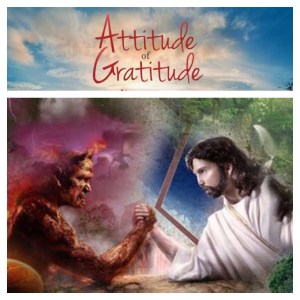
The last part of Paul’s prayer for the Colossian church is that they might have an attitude of gratitude to the Father for his mercy. The Father authored the great plan of redemption. The Father sent his Son to redeem men from sin. He paid the death penalty for our sin (“The wages of sin is death, the gift of God is eternal life through Jesus Christ our Lord” – Rom 6:23). Christ’s death on the cross redeemed man out of sin, set us free, pardoned, forgave and made us fit for God’s kingdom.
In regeneration (salvation) the Father made possible the great transfer of those in the kingdom of darkness to the kingdom of light; “from the empire of sin, ignorance, and misery, to one of holiness, knowledge, and [joy]. No change, therefore, in a person’s life is so important as this; and no words can suitably express the gratitude which they should feel who are thus transferred from the empire of darkness to that of the light“ *
Lord, may this old sentry’s life always reveal abundant gratitude to the Father for his redemption and forgiveness.
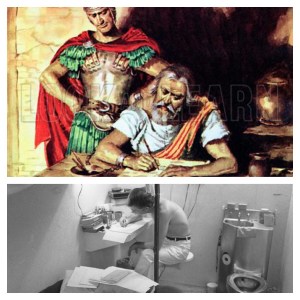
I have been in many jails and prisons in my ministry from God. But only as a minister, not as an inmate. Paul writes as an inmate. He writes to believers in Colosse from a prison cell in Rome (likely under house arrest, probably chained to a soldier). Young Timothy is there to assist (perhaps he lived in the house).
I have known and do currently know inmates and former inmates who have trusted Jesus as Savior. These men and women write inspiring letters from prison. They have had much time to focus long and hard on God‘s word. They often write lofty thoughts and phrases. So Paul writes soaring lofty thoughts. He is inspired by his Old Testament learning, his apostolic calling from God and under the direction of the Holy Spirit,.
I’ve been a soldier in war. I’ve been a minister in jails and prisons. Now, as a long tenured prayer sentry, I am ever more compelled in my “watch” hours to listen to God. I am compelled as a believer to pray, write and witness. Oh how I thank God for the place to which he has brought me in my life with him.
Here the Lord when he says, “Be quiet and rest, silent and still, listen and reflect.“ But his people would not. Elsewhere it says, “[God] will keep him in perfect peace, whose mind is stayed on him” (Isa 26:3). “Ask for the ancient way and walk in it. Travel that path and find rest for your soul. But his people would not” (Jer 6:16). “Come to me and I will give you rest“ (Mat 11:28). But God‘s people, we, who always have something to say, fill the silence, his quiet rest, with our own babbling.
Someone once said, “Blessed are those who have nothing to say and cannot be persuaded to say it.“*
God’s people disregarded God’s Word as trivial, nonessential and elementary. They boasted the great plans made of men. They, so liberated and free, will find God‘s Word to be the stone upon which they will stumble, fall and be broken in pieces. It will be the snare that traps them. Oh Lord, like Job, I have nothing to say. I have everything to gain by closing my mouth and waiting on you to speak (Job 42:1-6).
*Dobie, J. Frank, Cow People, University of Texas Press, Austin, Texas, (1964, 1984 – pg. 85)
At times the people of God do not want to hear from the “intolerable moralist“ among them. They have become overconfident in their religiousity. They mock the man or woman of God and so, the message of God is also made a mockery. Such was the reaction of Israel and Judah towards the prophet Isaiah
How does that feel? I once told a brother that his lack of spiritual concern about some circumstances would lead to a bad outcome. I was told that my comments were simply an overreaction. They were not welcomed. Sadly, it turned out I was right. It took several years for that brother to recover.
To the religious know-it-all, God’s correction is all just baby talk to them – they do not wish to hear such repetitious and condescending gibberish. So God will oblige them. He will speak to them in another language. The language of an oppressor; the language of judgment. Perhaps then they will listen. Lord, may I always have an open and willing heart toward you.
Whatever the judgments of God on a people, there will always be a remnant. They often go unseen and unnoticed during times of spiritual squalor. While kings and priests and prophets and judges are lost in their filthy lifestyles, reel and stagger in their vision of self aggrandizement and judgments, the remnant of God stand watch.
While the nation falters, God’s remnant goes to battle in prayer and righteous living. The Lord is their pride and joy. He is their justice and their mighty courage. They are to God a “highway of holiness” a flowing “stream in the desert.” For God’s remnant, sorrow shall forever flee (Isa 35:1–10). Oh Lord, you give this old sentry hope in the worst of times.
God’s symbolic covenant of redemption with Abraham (Gen 15:9-11,17,18)
MORNING WATCH NOTES:
The land taken captive by Assyria was God’s land, the land of Israel, the land of promise to God’s people, his “covenant” people. Genesis Chapters 12-15 tells the story of Abraham‘s covenant encounter with God. God chose Abraham through whom to deliver his messianic redemption. God chose Abraham, not because Abraham was so special. God chose him because he needed an instrument through which to reveal his grace.
The covenant spoken of here is a reminder of God‘s unilateral, unconditional love and grace. This covenant bound God alone to his plan of redemption. Men could never nullify God‘s plan of redemption by their lack of commitment. God seeks for men and women to come to him of their own free will and worship him. Lord, I come freely to offer you my love and devotion, imperfect as it is. I give you thanks for the blood you spilled at Calvary for my sin.