Unlike me, the Redeemer–shepherd, Jesus, always listens to God. He is obedient to the Sovereign Lord (note Jhn 5:19). He seeks God‘s wisdom. He awakens to God’s call and understanding. He hears God’s voice because he puts himself in a position, in a mindset to listen.
So when the Redeemer’s humiliation comes he is able to stand steadfastly. His face is set to do God‘s will. The Sovereign Lord will sustain him in his hour of need. The Sovereign Lord is on his side and will put to shame those who mock his Redeemer. But those who put their trust in the Redeemer will walk in the light (1Jn 1:6,7). Lord, awaken this sentry early to your word and your will. I eagerly wait for you to speak.
May your spiritual passion for relationship with God be restored (Acts 2:42–47). #PassionForGod
MORNING WATCH NOTES:
The new Christians in Acts DEVOTED themselves to the teachings of the apostles, fellowship, worship, prayer and witness. They were DEVOTED, PASSIONATE, in these things. These are the things I too ought to be passionate about. But somehow I lose my passion. I get complacent and/or apathetic. I lose my passion when the things I do become rote or mechanical. Things become all too familiar.
What is passion? Passion means “to be moved,” by something. “Spiritual Passion” means to be moved by God. To lose my passion is to no longer be moved by God. I become distracted by all the mechanics and preparations to teach, fellowship, worship, pray or witness. Or, I am just distracted by all the mechanics of life and living. Lord, I desperately need a recalibration of my focus on knowing you. I need to focus on you, not as a means to an end, but focus on you as the end itself.
Lord, reignite the flame of spiritual passion in this old sentry.
When the Spirit of God comes to rest in those who have trusted Christ as Savior, they will rejoice to call him Lord. They will enthusiastically speak as a witness for him. They will not condemn those around them. But they will convey the truth, that God loves the broken and fallen sinner. They will share the truth and God will do the rest.
That is what Peter, the disciples and the 120 did at Pentecost. The Spirit in-dwelt them. They preached the truth and invited others to follow Jesus. 3,000 people accepted the King’s invitation (probably more). Lord, when this sentry opens his mouth and shares Christ, seeds of faith are planted. Your kingdom will increase.
Bend our hearts Lord, to sharing the Gospel message with all we meet (Isa49:6,7). #GospelWitness #ShareTheGoodNews #ShareJesusNow https://bible.com/bible/59/isa.49.6-7.ESV
MORNING WATCH NOTES:
Verses 6 & 7 bears the mention of one further thought. Jehovah here reveals the importance of the Redeemer’s task. The restoration of the people of God back into relationship with him as paramount. But it was a small thing compared to being the light to all men.
It was far more important that the message of Redemption be spread to the ends of the earth. (Note Mat 28:19,20; Acts 1:8). It is to this end that believers in Christ are commissioned, called, to “Go and make disciples.” Lord, there could be no higher calling than to be a witness to others of the redemption story of Christ.*
Jesus, my redeemer–friend, wonders in his humanity at the outcome of his earthly work and ministry, as perhaps ineffective. (He also stopped and prayed three times over the certainty of God’s plan in the garden before his crucifixion – Mat 26:36-47.) He has no hesitation in trusting his life’s work into the hands of Jehovah God (v4). Isaiah 49:5-7 explains why.
Our Redeemer is confident in the source, strength and certainty of his life call and work (v5).
He is assured that nothing he did on earth will be lost. It will ultimately be used to point ALL men to God (v6).
Finally, he is assured that “rejection,“ or apparent failure, is not the measure of success in God’s eyes. God is faithful (v7 & 25:1).
Lord, I can learn lessons from Jesus in trusting you completely with the outcomes of the work to which you call me.
I have often wondered at the success of my call and work when everything around it may seem to have failed – at least according to the measure of men; when things fell short of my expectations. Well, here I learn that my friend and Redeemer – Jesus, felt the same way about his ministry. He says, “To what purpose have I come Lord? My work seems useless. But, I leave it in your hands Lord, Jehovah.“
Jesus’ mission, ending in a criminal crucifixion, may have seemed like a failure by men’s standards. However, Jehovah God was/is pleased with Christ’s work. But for a much different reason. His work would ultimately bring salvation to all men. Lord, my acceptance with you is based on the finished work of Christ on the cross and my faithfulness to your call on my life.
If you need me Lord, I’ll be here at my sentinel’s post as ordered.
Every now and then one has to stop and take stock of all God is doing; take into account the bigger picture. It enables the prayer sentry to pray with understanding. I had one of those days yesterday. Here is what God showed me.
The story of Israel, the Jewish race, is the story God’s redemption. God chose to reveal himself to mankind through the Jewish race. They would be the chosen seed, the chosen light pointing men to God. However, they failed to do that as a people. They were persistently disobedient and rebellious toward God. Yet, God seems somehow to always be the protective father, letting his favored child continue in disobedience. Why does God continually protect them? I find myself wondering, “Why does God seem to always put up with Israel’s waywardness and incorrigibility?” “Why did he choose them?”
The Old Testament reveals that God does discipline his chosen people throughout the course of their national life. But Israel, as a whole, never seems to get it. They just seem to be a constant disappointment to God. At one point God does seems willing to start over. But then Moses steps in to protect them. He asks God not to destroy Israel completely and God relents (Exodus 32:1-14).
The questions to me seem to be: why did God choose Israel? Would there not have been another people group who would have shown themselves to be more faithful? The answer to that questions is, “Probably not.” Why did God find it necessary to choose some outlying race of people anyway?
Certainly, greater minds than mine have pondered these questions for, no doubt, ages. But here is my simple and feeble assessment. I think the answer to why God chose Israel, the Jewish race, as his chosen people, lies in the omniscient plan, character and love of God. In the beginning God set out to redeem mankind from their fall into sin. God’s omniscient plan called for a Redeemer and a sacrifice for sin. This is seen in the first blood sacrifice of an animal out of the Garden of Eden. God performed the first sacrifice. Instead of killing Adam for his sin (for the wages of sin is death-Rom 6:23), God took the life of an animal (shed its blood as a substitute, propitiation for sin) and used the skin as a “covering” for Adam and Eve. Thus, God covered the sin of man (Gen 3:21).
Back to the nation of Israel. God didn’t choose the Jewish people because of their superior moral character or their religious devotion (Rom9:10-13). In fact, God never chooses any of us because we are so righteous or so good. In fact, to the contrary, Scripture says there is no one righteous, not one (Rom 3:10). But I digress.
The Jewish race was chosen because God is sovereign not because they were superior. He could have chosen any people group. Through this chosen seed, God would institute and implement symbols of worship, sacrifice and redemption. This structure in the Jewish sacrificial system would be, has been and is, sufficient to forecast or foretell God’s Redeemer and the sacrifice for sin. This sacrifice would be the ground of redemption for all who would believe.
Israel was and is no different from any other people group. They were, we all are, sinners. But what God needed was a human ancestry, a lineage, a seed from which a Redeemer-sacrifice would emerge, from which his GRACE would extend to all men. Jesus Christ, the Messiah, was that Redeemer–sacrifice. Jesus would be the fulfillment of God’s promise of redemption. He would be God’s sacrifice, God’s instrument of GRACE to all men for their sin. The Jewish nation was selected by the sovereign plan of God to bear witness to and be the seed and instrumentality of that redemption. She was not selected because she was perfect but because God is sovereign.
Further, God chose the Jewish race knowing full well in advance that they would be prideful, disobedient, obstinate, stiff-necked, rebellious and hard hearted. God knew in advance that this people would break his heart over and over again. God would discipline and or punish their sinful rebellion, but he would not completely destroy the ancestry, the lineage, the seed from which his Redeemer would eventually emerge. In fact, God would go to extravagant lengths to protect his people…even if it was only a small remnant.
So, the story and history of God’s chosen people is really the story of all men. Just as God showed mercy and grace to a sinful, stubborn and rebellious people of Israel, so he shows mercy and grace to all people. The story of God’s longsuffering with me is reflected in the story of God’s longsuffering with Israel. They deserved nothing. He gave them everything. So, it is with me as well.
All men everywhere are indebted. Not indebted to the Jewish race, but to God, for choosing a people (a people like me, no different from me) to reveal his Redeemer, Jesus Christ. There were no perfect people from which to choose. There are still no perfect people. Never has been. What we do have is a perfect Redeemer, Jesus Christ, whom God was pleased to sacrifice for the forgiveness of sin. Just as Israel was chosen by GRACE, sustained by GRACE and saved by GRACE, so we to are chosen, sustained and saved by GRACE.
There are none righteous, no not one (Romans 3:10).
All have sinned and come short of the glory of God (Romans 3:23).
The wages of sin is death, but the free gift of God is eternal life through Jesus Christ our Lord (Romans 6:23).
But God demonstrates is own love for us, in that while were still sinners, Christ died for us (Romans 5:8).
If you confess with your mouth the Lord Jesus and believe in your heart that God has raised him from the dead, you will be saved (Romans 10:9).
Next time you think that God is unfairly and forever longsuffering with the Jewish race, his seed of redemption, think about how longsuffering he has been and is with you as well. So we should be towards others.
Though the people of God were promise breakers, stubborn, obstinate, stiff-necked and hardheads (v1,4), still, God was gracious. Though they were indifferent to God and often ignored him, God was gracious. Though they did not listen when God exposed their idols as imposters (vv5,14) and revealed himself as far superior (vv12,13,17), still, he was gracious.
No matter the rebellious state of his people, still he was gracious. For the sake of his name he would deliver them, set them free to a future and a hope from captivity in Babylon (v11). God is the consummate loving Father. God has and always will, stand by his people, as a father with his children (vv20,21). He stands by me in my failures. But for those whom he does not know, there will be no peace (v22). Lord, the heart of this old sentry sings of his gracious Redeemer.
Isaiah chapter 48 could be summarized, “You did not listen.“ A theme that is repeated often in God’s word is “listen” to what God is saying. That is not the same thing as hearing. I may hear my father speak, but not “listen.” To listen implies understanding, acknowledging and obeying. If you hear an authority figure give an instruction and you say, “Whatever!“, then you’re not “listening.”
Israel’s problem was she was not “listening” to God; she was like, “Whatever!” The result was devastating – 430 years in Egyptian captivity, 70 years in Babylonian captivity. Had Israel listened and obeyed, verses 18,19 say much grief would have been avoided. Father God, give this sentry a heart to listen and the determination to carry out your instructions. Yes Lord! “Hooah!” *
* According to Stars & Stripes (military news paper) – “HOOAH” (or “huah”) is unique to the Army [“OORAH” – Marines]. Some say it stands for “Heard, Understood, Acknowledged.” It is shouted by a troop following an order given. It expresses determination to act as ordered. It expresses the Army spirit. (See also Jan 8, 2021 post, “HOOAH!”, this blog)
These final words in Chapter 45 are all at once magnetic, arresting and captivating. These words draw us inescapably into God‘s plan of mercy and righteousness.
Whom God chooses (here, the Persian king, Cyrus) he empowers for the task (v14). God moves in powerful and mysterious ways (vv15-17). What God says and does he does out loud, for all to hear and know. Following God is not the result of some “secret path.” He has said, “If you seek me, you shall find me“ (vv18,19). What God says he will do (vv20,21).
All men will look to him for eternal salvation. His promises are true and every knee will eventually bow before him. All will confess him and give praise to him. Those who have worked against him will be ashamed. His followers will boast in him alone (vv22–25). God’s plan of redemption is visible for all to see. Lord, I commit to remain open-eyed to all you say and do.
What happens when God delivers men from a drought of blessing, goodness and righteousness? What happens when revival comes, when awakening comes? Having lost their sense of worship for God in captivity, what would deliverance mean for Israel? What would it look like for us today.
The heavens will open wide with showers of blessing pouring down on the people. The skies open up and rain down righteousness on all men. Just as a parched land is watered and renewed, so the parched souls of men will sprout forth the beautiful fruit of salvation and righteousness. Such is the deliverance of Israel from her captivity. Such it will be for all men who repent and put their trust in God. Lord, pour down revival and awakening in our day on the parched souls of humanity.
“I [God] create good times and bad times.” Am I to understand here that God is the author of evil in the moral sense of sin? No! No! No! This statement is made in relation to the providences of God. He raises up prosperity, peace, pure religion and the like. He also calls forth adversity, calamity, ignorance, et all…but not evil, in the moral sense of sin. He gives us light. Darkness ensues because the light is withdrawn.*
When God withdraws his hand, bad things happen. But when God puts his hand of blessing on something (as here with Cyrus) good things happen. God’s point here is his complete and absolute superiority over all the things in heaven and on earth. He providentially works in the affairs of men. This is as true today as it was in the days of Cyrus.*
America may not want to hear this, but God says, “[I am he who] builds up nations, and [I am he who] destroys them. [I am he who] expands nations, and [I am he who] abandons them” (Job 12:23 NLT – see vv 13-24 for context https://bible.com/bible/116/job.12.13-24.NLT).
Lord put it into the heart of every prayer sentry to seek truth and learn from you in the good times and in the bad times. May every sentry standing on the wall speak with conviction and with compassion. May your Spirit not be withdrawn from our midst.
If there was ever a time in America when we needed a certain hope it is now. Give us a deep and abiding trust in you Lord.
PRAYER: Trust God in the hard times of life as well as the good times (Isa 44:4-8). #GodIsGoodAllTheTime #AllTheTimeGodIsGood https://bible.com/bible/116/isa.45.4-8.NLT
MORNING WATCH NOTES:
God clearly explains why he summoned, called and equipped the Persian, Gentile, pagan king, Cyrus. Because he knew his people would need 1) a deliverer from the coming Babylonian captivity, 2) a hope in the midst of tragedy and darkness (God is the God of both dark times and good times – v7) and 3) he would use this prophecy to later reveal himself as the One who fulfills his redemption promises. The entire world would know that he is God.
Lord, it is clear to me that you are always working behind the scenes on my behalf. Nothing happens by accident. You give me hope when all hope seems gone. I am never without hope.
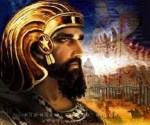
Here is seen one of God’s most incredible prophetic accounts. God declares through Isaiah, by name, that “Cyrus,“ the Persian, shall be God’s “shepherd“ king, “anointed one,” to deliver Israel out of Babylonian captivity.
Why so incredible? Because this prophecy was delivered by Isaiah 150 years before Cyrus was born. Further, he is the only pagan, Gentile king referred to by God as “anointed one.“ Cyrus is, in this sense, a type of the greater Anointed One, Redeemer of Israel and of all men, Jesus Christ. God chooses whom he chooses for his work of redemption. Lord, you alone are mighty to save. I put my trust in you.
Someone has said, “When you pray, pay attention to what happens next.” In other words, God will answer. Be alert to circumstances around you. Don’t be oblivious. The same is true of prophecy, the prophetic word of God. When God’s prophets speaks, pay attention to what happens next.
God says, “Pay attention, O Jacob.” Your sins are swept away. God has paid the price to redeem you. “Return to me,“ the Holy One says. Shout for joy…break into song, for it is done. The Lord predicted it. He says, “I will rebuild my Holy city. I will restore the ruins.” The prophets of God do not lie. Father, knowing your history of redemption, knowing the price you paid at Calvary for my sins, I have every reason to be secure in your future redemption.
Such a beautiful picture of the Lord’s Messiah (vv1–9). He will bring justice. He will not crush the frail reed or snuff out the last flickering light of a candle. He himself will be a light to guide the nations. He will open blind eyes, deaf ears and set free captives held in bondage to the enemy, the evil one.
God’s chosen Messiah, Jesus, is worthy of praise (vv10-17. He will lead blind Israel on a new path, smooth their road. He will not forsake them, though they have failed him time and time again. Lord, you deal justly with my sin, but you do not crush me. Though I so often fail you (vv18-25), you never fail me. Grace is greater than all my sin.
As Judah flaunts her foreign gods and idolatrous practices, the God of all providence challenges. The God of Israel predicts their future in a conquering king from the east who would defeat their captors, Babylon (promise no. 1) he would then release God‘s people from their captivity (promise no. 2). God will redeem his people. They will be strong and victorious again.
Fountains and rivers will spring up and flow in the desert (vv17-20). It is predicted. It is miraculous. What idol, made by man, can do this? But God, the Holy One of Israel, does this to prove his worthiness (vv26-29). God has made his case. There is no rebuttal (v26). There is no God like Jehovah-God. Lord, render my heart wholly abandoned to you.
Having announced the great redemption of God for his people, his majesty in the heavens and in the earth is extolled. This Sovereign God has no equal. He is incomparable to any man-made idol. Knowing his vast knowledge, understanding and power, knowing his compassionate love for his people, how can one say that he ignores those he loves.
Our God is everlasting. He never grows weary. He gives strength and power to the weak and the powerless. Trust in him and you will soar high like an eagle, run and never faint. Lord, give this old sentry a heart to trust you fully every day to supply whatever I may lack.
The Lord is calling me to temporarily step away from my post as a prayer sentry.
For many years I have come daily to my Morning Watch post, to read God’s word, to consider His ways and his message. Then to write, to journal my thoughts and to pray in earnest for the many souls in my books of prayer.
“My heart is overflowing with a good theme; I recite my composition concerning the King; My tongue is the pen of a ready writer.” – Psalms 45:1 NKJV
Although I struggle to set aside the duty of my post, the Lord reminds me that he himself had to take times away from the crowds to find refreshment. “But he would withdraw to desolate places and pray.”–Luke 5:15-16 . This is not the first time the Lord has led me in such a way.
When I served in Vietnam it was required that every soldier take a time of respite. So a short leave from the rigors of battle was not just granted but required. The purpose was to refresh and renew.
So for the next month or so I will take this sabbatical time to seek the Father, to refresh my soul in Him who loves me and to find renewal for my sometimes weary heart.
I will not quit praying for my family, my friends and my country. I’m just temporarily stepping away from the regimens I normally follow.
With verses 10 and 11 Isaiah closes this prologue to the rest of his prophetic utterances. “Behold [LOOK] the Lord your God…[your shepherd].“ Our God is holy, just and fierce against our enemies. But he is also a gentle pastor–shepherd to his people.
Men with all power tend to corrupt their power. But God, with almighty and eternal power will visit his people, not with the self-serving vicissitudes of power, but with compassionate, merciful and forbearing care. It is not just God’s self-restraint. He is holy yet “gentle and lowly” – that is just who our God is (Mat 11:29). Lord my feeble and wandering heart you mercifully embrace.
*For a beautiful impression of God as our shepherd see Barnes’ Notes on Isaiah 4:11.
With verses 10 and 11 Isaiah closes this prologue to the rest of his prophetic utterances. “Behold [LOOK here], the Lord your God.“ See your God as coming. See him as coming to deliver you from your troubles. See him coming with magnificent power and strength. See him as the mighty ruler that he is.
“Behold [LOOK here], the Lord your God.“ See him as the restorer of that which was lost by sin and the devastation of captivity. See him also as Messiah who comes to save to the uttermost. See him as the reward of heaven itself. Lord, may I have a vision of you as mighty in power and able to save to the fullest; my reward of restoration.
I can feel the joy and exuberance, as Isaiah writes what he sees and hears. He must have been filled to overflowing with great anticipation as to what God was about to do…deliver his people from their trouble (note vv 1,2 again). No doubt, Isaiah could hardly wait to herald the good news announcement to Jerusalem from the mountain tops, “Help is on the way!” “Your God is coming!”
How good to know that help is coming your way to deliver you from your life extremity. The Lord shall deliver his people, all those who love him. He did then, he will today and he will in the future. Lord, it is for me a joy to deliver God’s message of mercy and redemption in these days. May I be an effective voice for you.
How quickly public opinion changes. But God‘s word never changes. Men make promises and do not keep them. But God‘s word is true and he keeps his promises. Men are like grass that withers and flowers that fade when the heat and drought comes. But the word of the Lord stands forever.
God keeps his promises to deliver this ancient people. He kept his word to send a deliverer in Christ Jesus. He came to deliver men from the curse of sin. He will keep us until the day of our salvation. God’s word will never fail. Oh Lord, you are faithful even when we are not faithful. You are utterly reliable.
Here we enter into the preparations of a great Monarch to forge a path through hostile desert places, perilous/treacherous mountain passes and murky low places, serpentine pathways and impassable routes. Why? So that the Monarch may be with the people of his/her kingdom.
“The Voice?“ A crier, lowly and hidden by the royalty and glory of the Monarch. The crier leads a great procession, legions of crews and engineers, to remove every obstacle hindering access of said Monarch to the people. Jehovah God, the Monarch, will move to deliver his people from the baneful hand of Babylon.
Just so, John the Baptist was a “voice” in the wilderness crying out, “Make way [clear the way] for the Messiah [our Monarch].” He is the deliverer of all men from sin (Jhn 1:23). The Lord Jesus has come to deliver us in these modern times and epochs from the curse of sin. Open the highway to your heart. Lord, may I tear down every obstacle that hinders the work of the most high God in my life (1Co 10:5).
Could there be any more consoling words than those spoken here by God to Isaiah. The prophet is told to speak tenderly to his people who will face punishment for their sin. Isaiah is to speak words of comfort and pardon for sin.
Oh sinner, rebellious child of God, the sovereign God‘s heart breaks for you. No God like the God of heaven bears his heart to sinners and rebels like our God. Lord, this sentry is in debt for your pardon of my sin and your heart towards me and all who have sinned against you.
“I have learned how to be content…“ This is a parenthetic statement given in the midst of a gratuitous statement of deeply felt thanks to the Philippian church for their financial provision to Paul. Paul’s joy (expressed so often and so well in this letter) informed his sense of contentment.
Joy is detached from circumstances. It comes from a deep and abiding relationship with Christ. So contentment is detached from other inner desires for more and for abundance. It comes from the One who alone gives us strength and courage every day. Therein lies the secret of joy and contentment. Fully rely on God for EVERY need. Lord, fill me with your joy and contentment today.
I learned this lesson long ago from, Beggar At The Banquet, the story of Hong, Woo Joon. He, his parents, brothers and sisters were severely and unspeakably persecuted Korean Christians as communism took over Korea in the 1920s-40s. Hong’s story is told by Donald B Sheley.
The book opens with this quote from Hong. “Life is like a banquet in a strange land. Great expectation preceeds some of the [banquet] dishes while caution hinders the complete enjoyment of others. As the guest, one is expected to taste and experience each course. Some of the courses are delightful, and others are not, but all are given by a concerned host [the Lord] and must be received and appreciated. That is my philosophy of life, a philosophy which I have been practicing at life’s banquet for 52 years. Some of the courses have been wonderful, others have been bitter.”
The love and admiration between Paul and the Philippian church went both ways. He loved them and they loved him. They did not need coaxing to help Paul financially. It was and is what friends do. Help each other in times of need. They stood with Paul and his mission work like no other church.
Paul views their generous financial help as a sweet smelling sacrifice, pleasing to God. This same God will continue to supply all their needs, and his. We serve a God who is able to provide for every task to which he calls us.
Lord, I can never out give you. You supply my every need, allowing me to give generously to the cause of Christ. Thank you also Lord, for my church and it’s generous mission work.
This is not rocket science. If you always want to be full of joy (v4), contentment (v6) and know God’s peace (v7), do this: focus on the soon return of Christ (v5), spend time with God in prayer (v6) and exemplary living (v8) – enthusiastically embrace the truth and what is honorable; embrace what is ethically right and morally pure; embrace amiability and virtuous living; embrace an attitude of praise for all it is excellent.
Give attention to these things, study them, practice them. All of these things practiced consistently will lead to a life of joy and contentment and peace. It ain’t rocket science. Lord, I recognize that true joy, contentment and peace are not out of the grasp of even an aged old sentry.
I always want to hear what the Holy has to say to me directly. But this morning the New Living Translation Bible study notes ring the bell: “Ultimate joy comes from Christ dwelling within us. Christ’s coming is near, and when he comes we will fully realize his ultimate joy.“
In the meantime, “We are to be considerate (reasonable, fair minded and charitable) to those outside the church as well as those inside. This means we are not to seek revenge against those who treat us unfairly, nor are we to be overly vocal about our personal rights. [Christ] who lives within us will fulfill his final purposes for us“ (NLT study notes).
“The years teach much which the days never know.” – Ralph Waldo Emerson.
Lord, may the faithful sentry be always mindful to walk by faith and not by sight (2Co 5:7).